


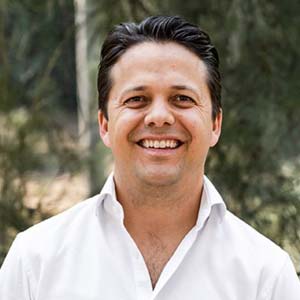
Daniel Santamarina
Daniel Santamarina has an extensive experience as an entrepreneur, building his first company as a student and creating multiple startups within the Marketing, CPG, and Service industries. Daniel has an extensive track record of leading several investments across LATAM and the US as an investor.
In an exclusive interview with Startup City, Daniel Santamarina imparts his insights on startup opportunities within the Latino region.
Could you give us an overview of your experience in Dux Capital and how your experiences helped the company to evolve?
My experience with Dux Capital begins with its creation back in 2016. Dux Capital started with a mindset of an startup investing in startups. While we started with the intention of helping the Latin American ecosystem, we soon realized that the Latino community in the US also required assistance. We are an early-stage venture capital firm that invests in US-based Latino founders, and our idea is to move the needle across the gap between Latin and non-Latin investments. In 2018, we made our first investment after raising USD 6.8 million in funds and 17 more investments in our portfolio. Most of our startups are from Mexico, Argentina and from the US, and we see the Latino community across the Americas as an excellent way to close these gaps.
How has the startup ecosystem evolved after the pandemic?
In the Latin American regionstartup funding grew 18x between 2017 and 2021, which led to a massive growth in tech startups. With about 16.3 billion invested in the area, 2021 was a record year for valuations, unicorns, and deals. There has also been a massive growth of new Venture Capital firms across the region. We see tremendous potential in different trends like e-commerce, which grew 63% in 2020 against the expected 12.5%, accelerating user penetration. Similar to the E-commerce trend, we observed an amazing growth in payment methods during the last couple of years. Despite the same number of deals as last year (2021), we haven't seen the same amount of funding in the first two quarters of this year (2022). There has been a slowdown in Latin America, but we believe there will be another successful year for deals and startups.
It is estimated that there are 60 million Latinos in the US, constituting 20 percent of the market. Although the Latino population paves a scope for great potential, numerous problems exist, such as a lack of funding and a disparity between Latino and non-Latino investors. Latino investment decreased from 1.5 to 1.1 percent in 2021, and the financing for Latinos must grow to maintain this investment ratio.
Do you think the lack of talent is a challenge faced, or as an industry leader, what do you think are the challenges faced by the startup industry?
The lack of talent is not a significant challenge, in my view. However, the region is home to a great deal of talent that is growing rapidly. What eventually turns out to be a problem is when US businesses employ Latinos, who then migrate to the country. Now, the Latino employer has to cope with the cost of doing business or the wage competition between the US and Latin American nations.
Corruption is yet another major challenge faced by startups. In the same way, the macroeconomic situation in the last election has been a challenge, as most countries are falling behind in terms of innovation and technological development. In addition, poverty is another enormous gap that needs to be addressed. Currently, these are the biggest challenges facing the industry and the Latino region.
What strategies are deployed by Dux Capital to help entrepreneurs overcome the challenges?
In the US, only 2 percent of the total venture capital investment professionals have a Latino heritage or only 7 percent of the large funds, and 17 percent of the small funds are based outside the Bay Area, New York, or Los Angeles. By leveraging our presence in Mexico City and the US, we have developed a unique cross-border strategy where we can invest and use our Smart Money. This capital is being controlled by institutional investors, market mavens, central banks, funds, and other financial professionals, to assist startups as they scale and address different markets. Since Mexico is in a great position between Latin America and the US, it is an excellent market for startups that want to scale from Latin America to the US and vice versa. We help them expand to different countries; connect with various investors and corporations, resulting in different contracts. Our goal is to work closely with startups, mitigate risks, and help the staff to achieve the best outcomes. That is part of our mindset; we are active investors but not invasive investors.
What advice would you impart to your peers in investment funds, venture capitalists, and entrepreneurs?
My advice would be that they need to address or seek new market opportunities. In Latino communities, there are more opportunities to establish a business if you identify and resolve the problems. Latino entrepreneurs have numerous opportunities to outperform their competitors. We understand that underrepresentation and underperformance is the best way for them to reach their goal, and we believe that we can help them achieve that goal. Lastly, if they think there's an opportunity to have loop capital as a partner, helping them scale, it will be a pleasure to connect with them.
